Patients and healthy volunteers in an integrative approach to drug development in oncology
Until recently, healthy volunteers had no place in the clinical development of cancer drugs: classical therapeutics, such as chemotherapy, are simply too toxic. However, things have changed with the development of molecular targeted and immunomodulatory drugs in oncology. In collaboration with academic, clinical and industry partners, CHDR is breaking new ground with an integrative oncology drug development programme that aims to use the same biomarkers in both healthy volunteers and patients.
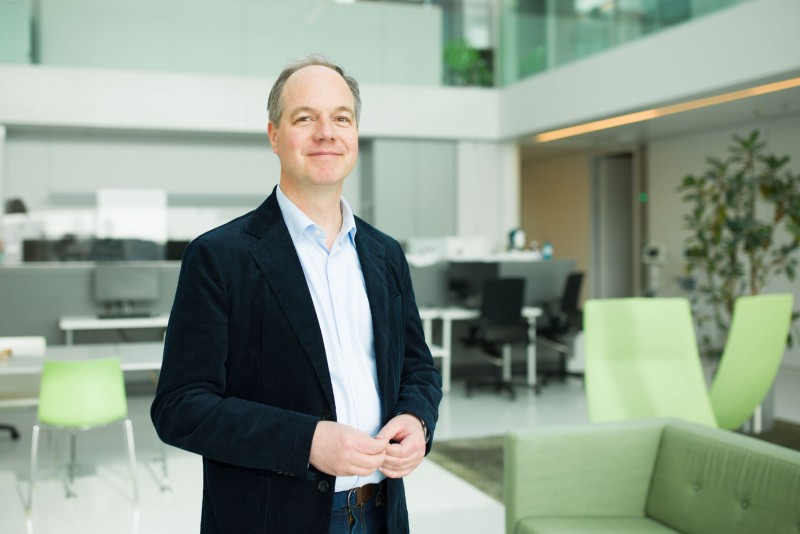
‘Through my discussions with clinical and academic cancer experts from across the Netherlands, it’s become clear to me that there’s a great need for a new approach to cancer drug development,’ says Dr Jacobus (Co) Bosch, Research Director in Oncology. ‘During the COVID-19 pandemic, we all witnessed how an integrative approach enabled rapid vaccine development. We think an integrative approach can speed up the drug development process in oncology as well.’
In an integrative approach, the classical phases of drug development interact more closely and may even be partly combined. For this to succeed, it is pivotal to have an interdisciplinary team. ‘We’re currently in the process of building a collaborative network of clinical specialists from various fields of oncology, along with hospital-based clinical research units in the region and beyond,’ says Bosch.
[text continues below the photo]
Healthy volunteers in oncology
In 2022, CHDR’s Oncology group published a study showing that immuno-oncological drugs can be safely studied in healthy volunteers. This systematic literature review, undertaken by Clinical Scientist Igor Radanovic, showed how involving healthy volunteers may be beneficial for early-stage oncological drug development. ‘In the absence of confounding factors mediated by malignant disease, dose finding is more efficient. This avoids inefficient dose-finding studies in the target population as well as the inclusion of patients in studies with pharmacologically inactive doses,’ says Bosch. ‘Overall, an integrative approach has the potential to accelerate the drug development process in oncology and make early assessment of proof-of-pharmacology more efficient.’
The challenge is to discover relevant biomarkers that can facilitate early pharmacodynamic assessment in both healthy volunteers and patients. This is where CHDR’s extensive track record in developing biomarkers and challenge models comes into play. Bosch: ‘Obviously, not all new drugs in oncology lend themselves equally well to studies with healthy volunteers. For example, immune checkpoint inhibitors have an increased risk of inducing strong autoimmunity.’ With this in mind, novel PK/PD modelling and further development of CHDR’s derisking strategies, such as the IB-Derisk tool, will be important.
‘It’s clear that healthy volunteers can play a valuable role in drug development in oncology. Of course, as with any drug, a thorough risk assessment is essential. But the potential is enormous,’ says Bosch. ‘We’re encouraged by the growing demand and support for this approach among oncologists. We’re now actively pursuing a strategic programme, designing novel study protocols as well as setting up interdisciplinary collaborations with both industry and academia. We look forward to further developing our integrative approach for oncology together with our partners.’
Interested in learning more?
More articles from Developing drugs